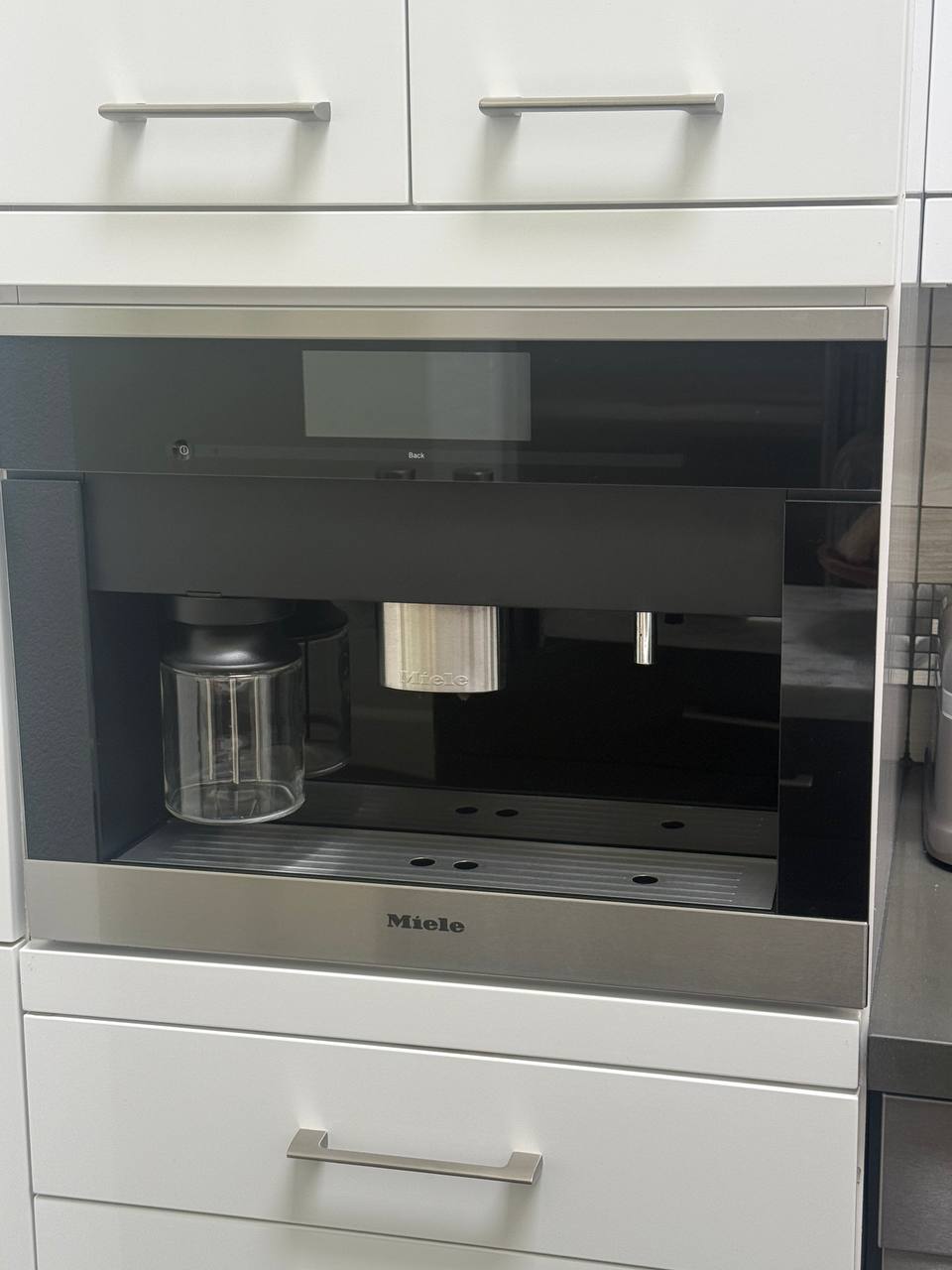
A built-in Miele CVA6805 in an Alamo home was pouring weak and short. The owner figured the machine was on its way out. It wasn’t. It was dirty, and it had been dirty for a while.
What I found inside
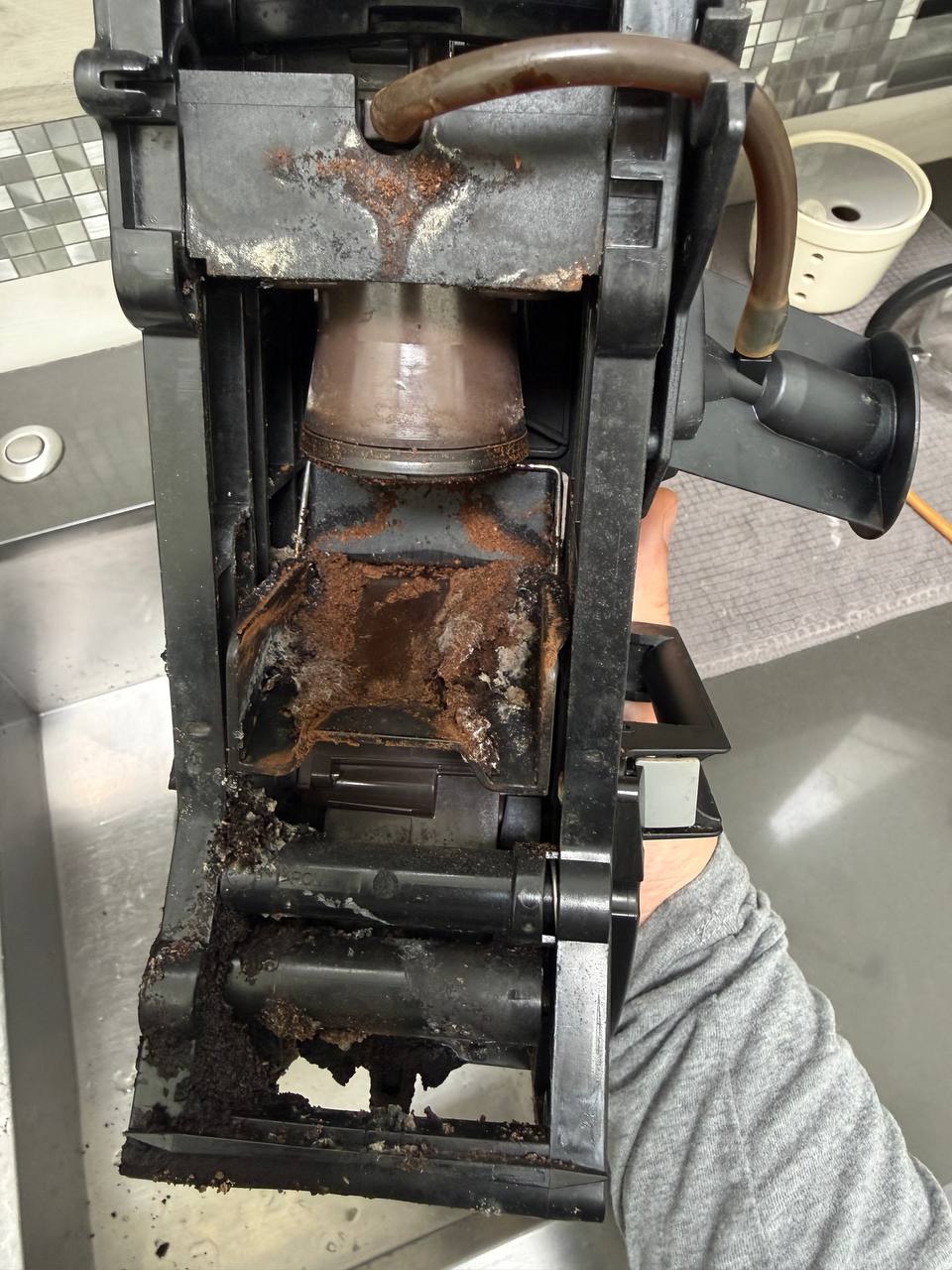
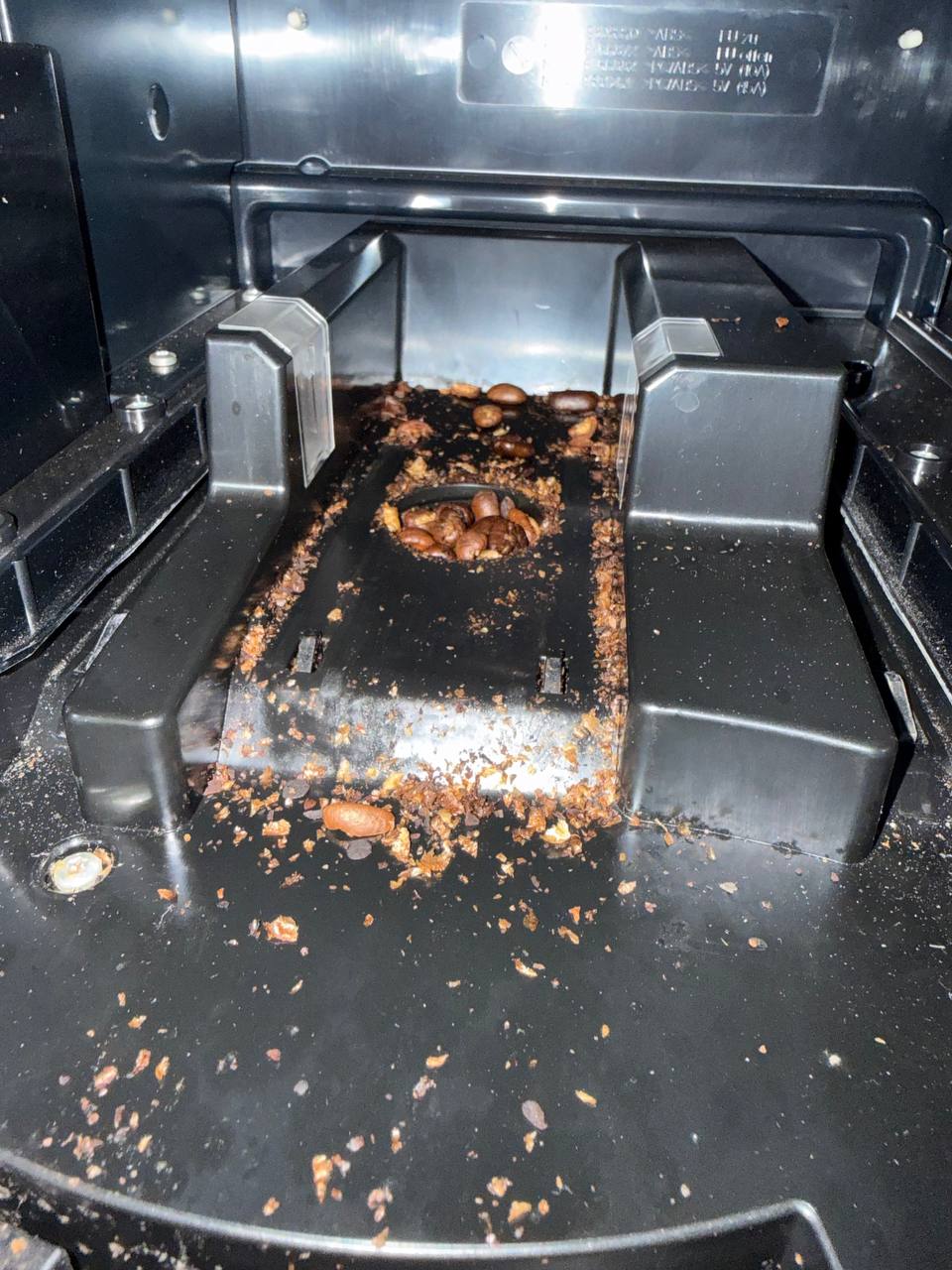
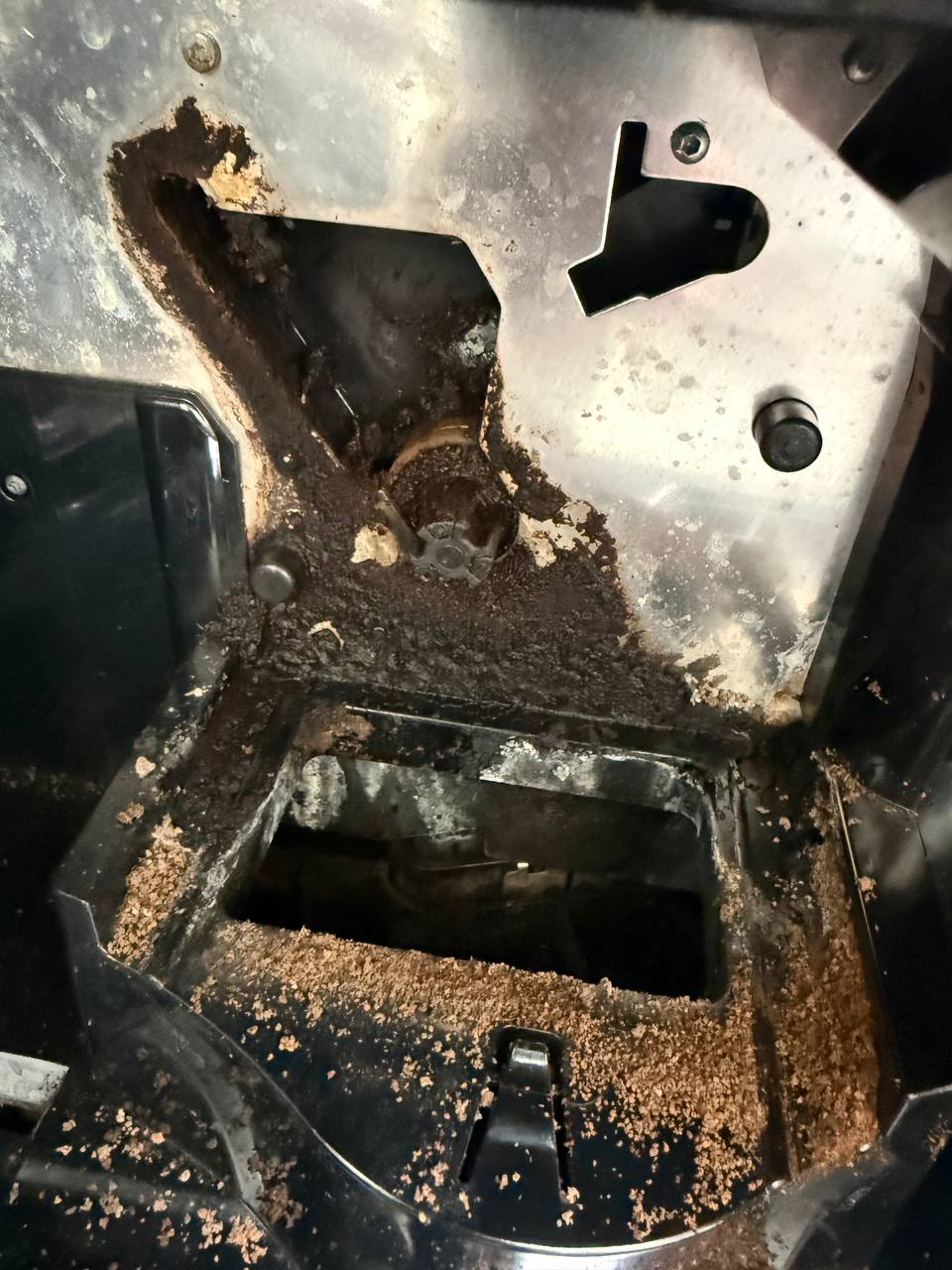
The brew unit was caked with old grounds and dried coffee oil. That oil is the real culprit. It’s sticky, it doesn’t rinse off on its own, and it builds up on every surface the coffee touches. The grinder and bean chute were clogged with oily fines, and a couple of beans had bridged at the top so the grinder was barely getting fed. On top of that, loose grounds had spread around inside the cabinet from months of missed cleaning.
None of that is dramatic. It’s just what happens when a machine runs every day and the deep cleaning gets skipped.
Why a built-in loses strength
A weak, short pour almost always comes back to two things: the brew unit and the grinder.
When coffee oil coats the brew unit, water can’t push through the puck the way it should. You get a thin, fast pour instead of a full one. When the grinder and chute gum up with fines, the machine can’t grind a proper dose, so there’s less coffee in the basket to begin with. Put those together and the cup tastes watered down even though nothing is technically broken.
People usually blame the water, the beans, or the machine itself. Nine times out of ten it’s buildup.
What a deep clean actually involves
This is more than dropping a cleaning tablet in and walking away. On this Miele I pulled the brew unit out and cleaned it by hand, cleared the dried oil and packed grounds, then worked through the grinder, the bean chute, and the whole grounds path until the residue was gone. I cleaned up the spread inside the cabinet, reassembled everything, ran a cleaning cycle, and tested the pours until they came back to full strength.
I’ll be straight with you: this was a maintenance fix, not a parts repair. No part failed. The machine needed a thorough cleaning that the built-in cycle alone can’t reach.
A cleaning cadence that keeps this from coming back
You can stretch the time between deep cleans with a little regular upkeep:
Wipe and rinse the brew unit about once a week. Run the machine’s prompted cleaning and descaling cycles when it asks, not three months later. Empty the grounds container before it packs down, and keep an eye on the beans so the hopper doesn’t sit half full of stale, oily ones. On a machine pouring several cups a day, plan a real hands-on deep clean once or twice a year.
Dark, oily roasts speed up the buildup, so if that’s what you drink, lean toward the more frequent end.
When to call instead of fighting it
If you’ve run a full cleaning cycle and the pours are still weak, or the grinder is straining and grinding loud, that’s the point to bring someone in. Forcing a clogged grinder or a gummed-up brew unit is how a cleaning job turns into a parts job. Same goes for leaks, error codes, or a machine that won’t finish a cycle.
We’re an independent repair shop based in San Ramon, not factory-authorized for Miele, and we work on built-in machines like the CVA6805 across the Bay Area. The $175 deposit includes pickup, bench diagnosis, and return and is not credited toward repair. You get a written quote before any work starts. Licensed California contractor, CSLB #1136642.
If your built-in is pouring weak in Alamo or nearby, give us a call at (925) 999-4095.